
Free Shipping
Door to Door All Across America
Door to Door All Across America

When creating a beautiful kitchen, every detail matters. From countertops to cabinetry, every element reflects your personal style. Choosing between copper and brass finishes can be a challenge, as both metals are durable and elegant, developing a unique patina over time.
This guide will help you compare these two materials so you can make the ideal choice for your kitchen design.

A copper range hood kitchen design is known for its rich warmth and evolving surface character. Copper is a “living material,” meaning it naturally changes over time when exposed to air, moisture, and cooking conditions.
Copper hoods are often used in high-performance kitchens where CFM requirements are higher, as they pair well with powerful ventilation system setups designed for heavy cooking. Whether used in a wall mounted range hood or an island range hood, copper creates a strong architectural centerpiece.
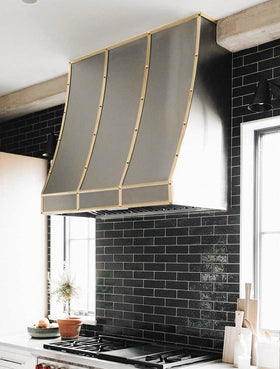
Brass range hoods integrate seamlessly into modern kitchen ventilation systems, especially in open-concept layouts where the hood becomes a visible design feature. In island range hood installations, brass often acts as a sculptural statement piece.
Both copper and brass are highly durable materials when used in high-quality custom range hood construction.
· Copper: faster aging, more dramatic visual evolution;
· Brass: slower aging, more stable long-term appearance;
In both cases, proper maintenance ensures optimal performance of the grease filtration system and long-term ventilation efficiency, especially in high-use kitchens with demanding CFM output requirements.
Both materials support full customization in modern high-end range hood design, including:
· Wall mounted range hood installations;
· Island range hood centerpieces;
· Fully custom sizing for kitchen layouts.
Copper tends to emphasize warmth and artisanal craftsmanship, while brass leans toward refined architectural luxury.
The best choice depends on both design intent and ventilation needs:

· A warm, natural, evolving finish;
· A rustic or farmhouse kitchen style;
· A handcrafted, artisan aesthetic.
· A bright, luxury-focused design statement;
· A modern or transitional kitchen style;
· A more polished architectural centerpiece.
Leave a comment